Living in South End: The Essential Guide for Young Professionals
Explore South End’s young, energetic vibe: 74 Walk Score, LYNX Blue Line, Rail Trail, $625K median listings, and top Charlotte nightlife.
Written ByTristan Armstead
PublishedOctober 16, 2026
Armstead Realty Group is a Charlotte, NC real estate team helping buyers and sellers with finance-driven strategy, a 5% listing fee, and English, Spanish, and Tagalog service. Serving Charlotte, NC, Cramerton, NC, McAdenville, NC, Lowell, NC, Dallas, NC, Lake Wylie, SC, Mount Holly, NC, Pineville, NC, Fort Mill, SC, Monroe, NC, Tega Cay, SC, Harrisburg, NC, Gastonia, NC, Concord, NC, Huntersville, NC and Belmont, NC.
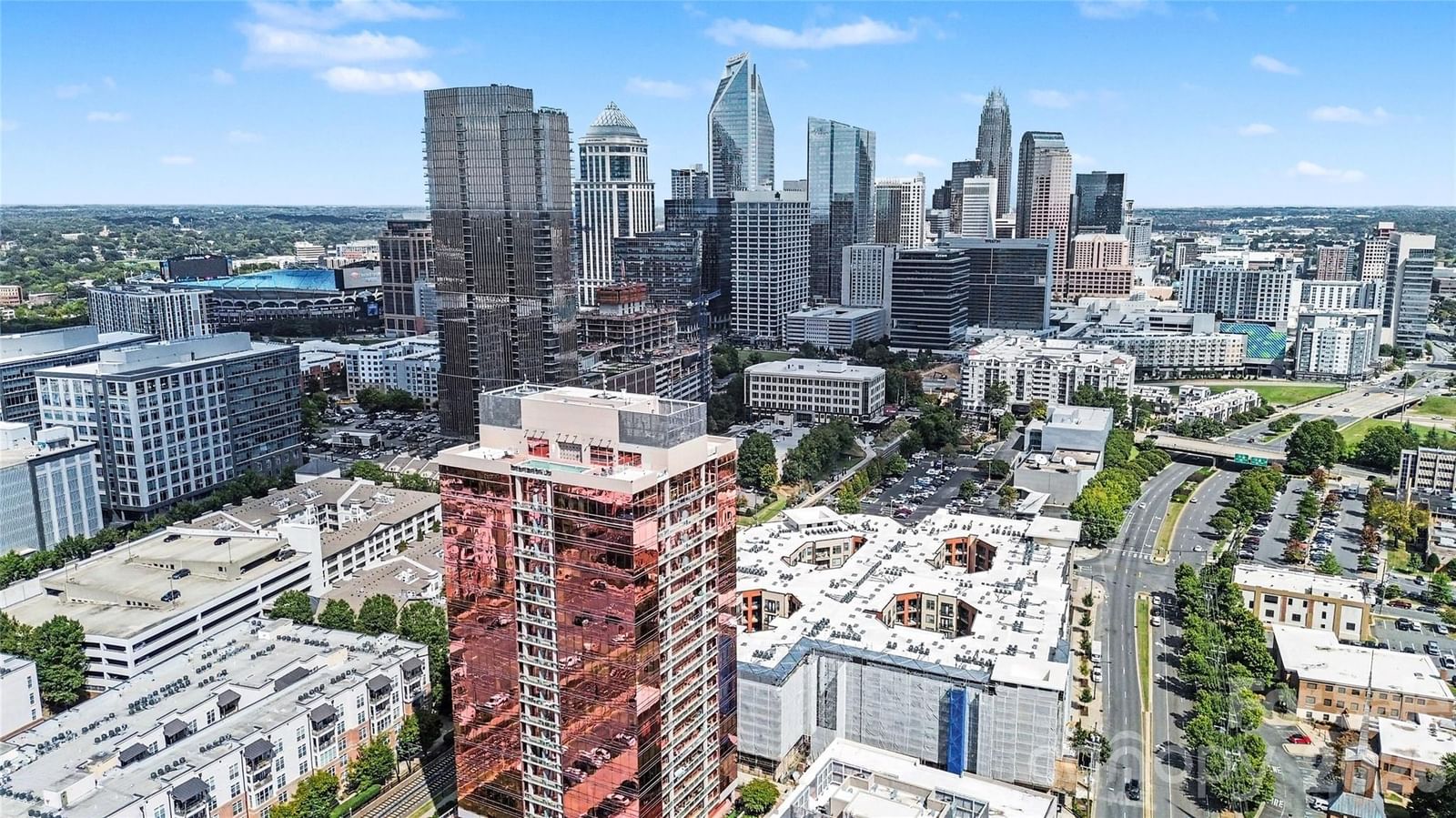
South End is Charlotte's most energetic close-in neighborhood. What was once a rail and textile corridor now holds breweries, fitness studios, mid-rise condos, and the city's best-known light rail line. If your ideal week includes walking to dinner, riding the train to work in Uptown, and catching the skyline from a rooftop, this guide covers what you need to know as of October 2026.
What Is the Vibe Like in South End, Charlotte?
South End is busy, social, and built for people who'd rather not depend on a car. It ranks among Charlotte's most active neighborhoods. Evenings and weekends draw crowds to patios, breweries, and the Rail Trail. People who thrive on energy love it here. People who crave quiet may not.
When we show homes in South End, buyers notice the foot traffic first. Residents are out walking dogs, jogging, and heading to happy hour well into the evening. Local market data describes the community as "young and energetic," and that lines up with what we see on the ground. The core buyer groups are first-time buyers, Uptown professionals, downsizers, and investors.
Is South End walkable for young professionals?
Absolutely. South End carries a Walk Score of 74, a Transit Score of 64, and a Bike Score of 58. Those numbers stand out in Charlotte, where the citywide Walk Score is just 26 and 76.6% of workers drive to work alone. Day to day, most residents can reach groceries, coffee, gyms, and nightlife on foot.
Daily life revolves around The Rail Trail , a 3.5-mile path running alongside the light rail tracks. It's the go-to route for morning runs, dog walks, and getting to dinner, and public art lines much of the way.
What is the food and nightlife scene like in South End?
South End packs in one of Charlotte's densest concentrations of restaurants, breweries, and bars. Longtime favorites include Suffolk Punch, Wooden Robot, and Poplar Tapas, alongside cocktail lounges, boutique fitness studios, and independent coffee shops. Weekend brunch lines are simply part of the experience. On a pleasant evening, expect most patios to fill up early.
Things to know before you move:
•Weekend noise: Units near the busiest stretches of the Rail Trail and the brewery clusters get loud on Friday and Saturday nights. Light sleepers should ask about window ratings and which direction a unit faces.
•Heat: Climate data rates 66% of South End properties at severe heat risk over 30 years, and July highs typically reach 90°F. Shaded walking routes and dependable HVAC make a real difference.
•Flooding: Flood risk is minor, with only 1% of properties at risk.
What Are Condos and Townhomes Like in South End?
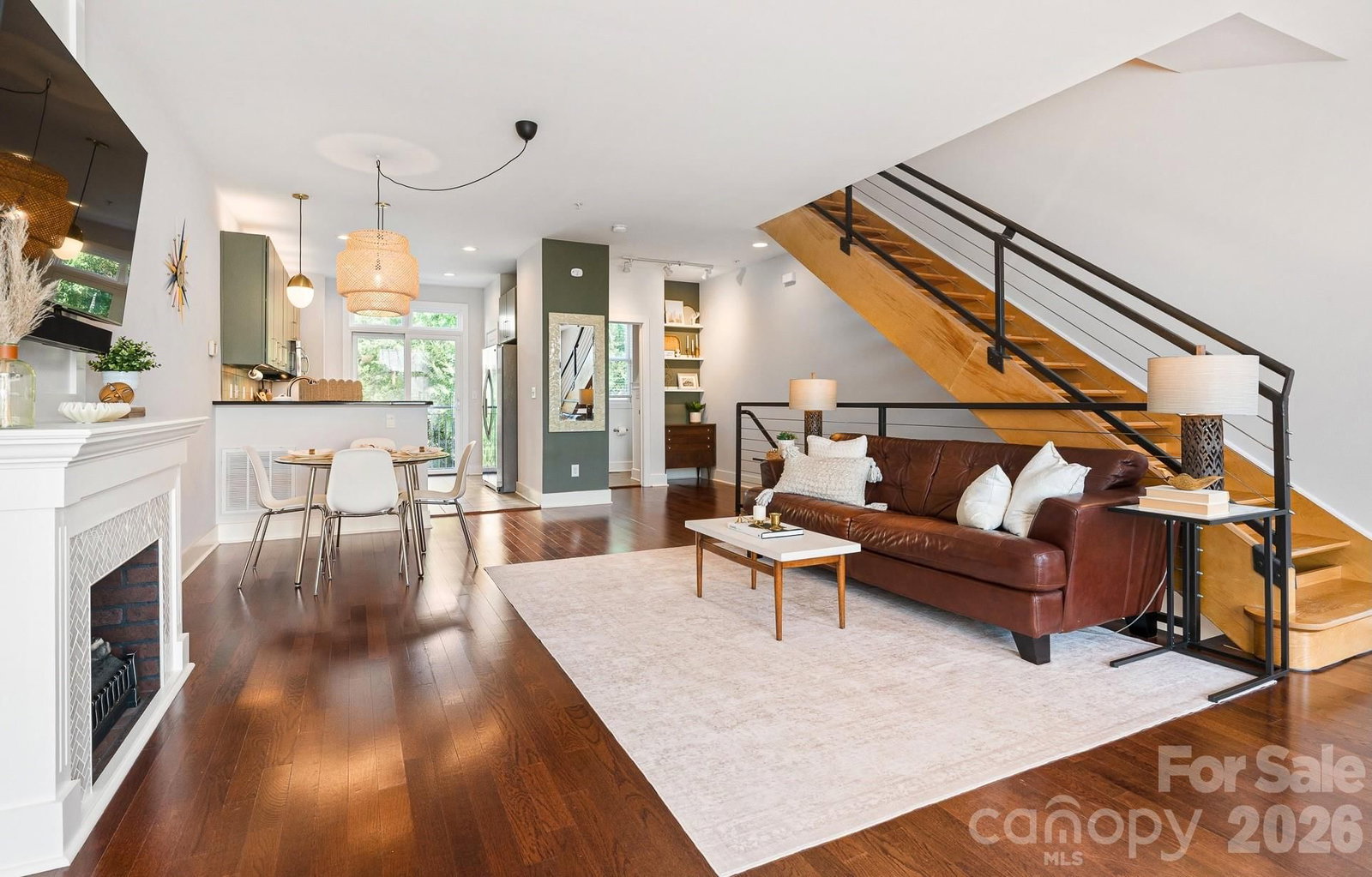
South End's housing is dominated by modern condos and townhomes, with limited single-family options. Buyers here trade yard space for vertical square footage, shared amenities, and the freedom to walk everywhere.
What architectural styles will I find in South End?
Because South End began as an industrial rail corridor, its buildings look nothing like Charlotte's tree-lined historic districts:
•Mid-rise and high-rise condo buildings. These form the backbone of the market. Expect concierge or controlled-access lobbies, fitness centers, pools, and rooftop terraces with skyline views.
•Contemporary townhomes. Typically three or four stories, with a rooftop deck or private terrace and an attached garage. They appeal to buyers who want more room than a condo offers, minus the yard work.
•Adaptive reuse. Several former mill and warehouse buildings now house lofts, offices, and retail. Exposed brick and high ceilings give parts of the neighborhood a distinctly industrial character.
How big are lots in South End?
Small. Most townhomes sit on narrow urban parcels with little or no yard. Outdoor space tends to take the form of a balcony, rooftop deck, or shared courtyard. The data points to low-maintenance living and walk-to-everything convenience as the main demand drivers, a natural fit for busy professionals who'd rather spend Saturday on the Rail Trail than behind a mower.
What does the South End housing market look like in October 2026?
South End is a premium urban market with very limited for-sale inventory and a large rental base.
South End Market Snapshot: October 2026
Headline buying and renting indicators for The South End, highlighting a premium urban market with limited for-sale inventory and a large rental base.
•Only 14 active listings. For-sale inventory is extremely thin next to 380 rental properties.
•Median days on market is 44, according to Realtor.com listing data.
Our advice to clients: With so few listings available, preparation matters. Line up financing in advance, review HOA documents early, and work with an agent who knows how units in a specific building have been selling.
Is South End a good long-term investment?
Historically, yes. South End leads Charlotte's urban-core neighborhoods in five-year appreciation.
5-Year Appreciation Leaders Near Charlotte’s Urban Core
South End leads the listed neighborhood set for 5-year historical appreciation, reinforcing its appeal for buyers who want an urban lifestyle with long-term ownership upside.
South End leads the listed neighborhood set for 5-year historical appreciation, reinforcing its appeal for buyers who want an urban lifestyle with long-term ownership upside.
At +41% over five years, South End has outpaced Dilworth (+38%), Plaza Midwood (+36%), and Uptown (+29%). Past performance doesn't guarantee future gains, but this track record explains why so many young professionals view a South End condo as both a home and a long-term asset.
Charlotte-wide forecasts range from 0–2% annual appreciation if rates stay above 7.5% to 6–8% if rates ease toward 5.75–6.0%, with a base case of 3–5%. Realtor.com currently lists the average 30-year fixed rate in South End at 7.252%.
What should I budget beyond the purchase price in South End?
•Property taxes: For FY2027, Mecklenburg County charges 49.27 cents per $100 of assessed value, and the City of Charlotte charges 29.30 cents per $100, up from 27.41 cents.
•Closing costs: Generally 2% to 5% of the purchase price.
•HOA dues: These vary considerably based on amenities. A building with a concierge, pool, and rooftop will cost more than a small townhome community. Always review the HOA budget and reserve study before submitting an offer.
Is it better to rent or buy in South End?
That depends on how long you plan to stay. Keep in mind that South End rents sit at the top of Charlotte's market.
Average 1-Bedroom Rent Ranges in Young Professional Hotspots
Shows the monthly 1-bedroom rent spread in top Charlotte neighborhoods for young professionals, with South End priced near the upper end of the lifestyle-and-transit premium set.
Shows the monthly 1-bedroom rent spread in top Charlotte neighborhoods for young professionals, with South End priced near the upper end of the lifestyle-and-transit premium set.
One-bedroom rents in South End run roughly $1,800–$2,400, compared with $1,600–$2,100 in NoDa and $1,500–$2,000 in Plaza Midwood. The overall median rent is $2,168/month.
Supply continues to grow. Hoffman & Associates' $300 million Distribution Street project, for instance, will add more than 700 apartment units. The 330-unit first phase is targeting Fall 2026 completion, with the 410-unit second phase expected in Summer 2027. If you're renting, ask about move-in concessions, which are common across Charlotte right now.
Where Do People Gather in South End?
Social life centers on the Rail Trail, the brewery and restaurant clusters near the light rail stations, and a long list of boutique gyms.
What are the main social hubs in South End?
•The Rail Trail. Think of it as South End's pedestrian main street. It's where neighbors meet for coffee walks, watch new public art go up, and kick off their evenings.
•Brewery and taproom clusters. Spots like Wooden Robot function as neighborhood living rooms, complete with trivia nights, run clubs, and dog-friendly patios.
•Restaurant rows. Dining concentrates along the Camden Road and South Boulevard corridors, where Suffolk Punch and Poplar Tapas remain long-standing favorites.
•Boutique fitness. Studios cover everything from Pilates to HIIT. For many residents, the 6 a.m. class is where they actually get to know their neighbors.
Where can I find green space and dog parks in South End?
Green space here is mostly linear and urban rather than sprawling. The Rail Trail serves as the primary outdoor amenity. Dog owners also frequent Skiptown Charlotte , a dog park and social club where pups run off-leash while their owners mingle. For larger parks, Dilworth's Latta Park and Freedom Park are a short drive or bike ride away.
How Is the Commute from South End to Uptown Charlotte?
It's one of the easiest commutes in Charlotte. The LYNX Blue Line gets most residents downtown in minutes, with no parking costs.
Urban Mobility Scores: South End vs Nearby Neighborhoods
Compares walk, transit, and bike scores across close-in Charlotte neighborhoods. South End stands out for stronger transit access than several nearby lifestyle districts, supported by the LYNX Blue Line and Rail Trail.
Cherry
Dilworth
The South End
Third Ward
Brookhill
Compares walk, transit, and bike scores across close-in Charlotte neighborhoods. South End stands out for stronger transit access than several nearby lifestyle districts, supported by the LYNX Blue Line and Rail Trail.
South End's Transit Score of 64 beats both Cherry (54) and Dilworth (44), and that gap comes almost entirely from the light rail.
Which LYNX Blue Line stations serve South End?
The LYNX Blue Line stretches 19 miles across 26 stations and runs straight through the heart of South End. Neighborhood stops include Carson, Bland Street, East/West Boulevard, and New Bern. Northbound trains head directly into Uptown before continuing to the NoDa Arts District and University City. Southbound trains connect to the I-485 park-and-ride area.
When we tour condos with buyers who work in Uptown, proximity to the nearest station is often the deciding factor. Many end up committing to life with one car, or none at all.
Can I bike or walk from South End to Uptown?
Yes, and it's about to get easier. Plenty of residents already walk or bike the Rail Trail into Uptown. The planned pedestrian and bike bridge over I-277 will close the biggest gap along that route.
$11.5 millionTotal Project Funding
South End to Uptown Pedestrian Bridge Project
A major connectivity upgrade for Rail Trail users, cyclists, and car-light commuters, linking South End and Uptown across I-277 with an expected 2027 completion.
The $11.5 million bridge has faced repeated delays. Originally planned for 2022, it's now expected in 2027, with construction underway since mid-2024. Once open, it should make car-free commuting even more appealing and boost the value of homes near the Rail Trail.
How easy is it to drive from South End?
Driving is convenient, though congestion is climbing. South End sits close to I-77 and I-277, offering quick access to Uptown, the airport, and the wider region. Charlotte drivers lost 48 hours to traffic last year, and congestion rose 17% year over year. That trend goes a long way toward explaining why South End's transit access keeps drawing buyers.
Is South End Right for You?
South End is a strong match if you value walkability, an active social life, and the easiest Uptown commute in Charlotte, and you're comfortable with condo or townhome living. Buyers set on a large yard or a quiet street will likely be happier elsewhere.
With for-sale inventory this thin, prepared buyers hold the advantage. If you're deciding between renting and buying, or comparing buildings by HOA costs and train access, start with two things: the building's reserve study and the walking distance to the nearest Blue Line station.
Listings courtesy of Canopy MLS as distributed by MLS GRID
Based on information submitted to the MLS GRID as of Oct 19, 2026, 1:25 PM EDT. All data is obtained from various sources and may not have been verified by broker or MLS GRID. Supplied Open House Information is subject to change without notice. All information should be independently reviewed and verified for accuracy. Properties may or may not be listed by the office/agent presenting the information.
IDX information is provided exclusively for consumers' personal, non-commercial use and may not be used for any purpose other than to identify prospective properties consumers may be interested in purchasing. Information is deemed reliable but is not guaranteed by MLS GRID. Use of it may be subject to an end user license agreement prescribed by the MLS.
Properties displayed may be listed or sold by various participants in the MLS.
Some IDX listings have been excluded from this website.
Any use or search of the data on this website, other than by a consumer looking to purchase real estate, is prohibited.
Explore Charlotte, NC Neighborhoods
Dive deeper into the specific villages and communities that make Charlotte, NC unique.
Is South End in Charlotte, NC a good place for families?
South End is best suited to households that want an active, urban lifestyle with walkability, light rail access, restaurants, gyms, and social amenities nearby. It is less ideal for families looking for a quiet street, a large yard, or traditional single-family-home living.
What types of homes are available in South End Charlotte, NC?
South End housing is mostly modern condos and townhomes, with limited single-family homes. Buyers will find mid-rise and high-rise condo buildings, contemporary three- or four-story townhomes, and some adaptive-reuse loft-style spaces in former mill or warehouse buildings.
How much do condos and townhomes cost in South End Charlotte, NC?
South End is a premium urban housing market. As of October 2026, the median listing price is $625,000, the median price per square foot is $427, and active for-sale inventory is very limited at 14 listings.
Are HOA fees common in South End Charlotte, NC?
Yes. HOA dues are common because much of South End’s housing consists of condos and townhomes. Fees vary by building and community, with higher costs typically found in properties with amenities such as concierge service, pools, fitness centers, controlled-access lobbies, and rooftop terraces.
Is it cheaper to rent or buy in South End Charlotte, NC?
It depends on how long you plan to stay. South End rents are among the highest in Charlotte, with one-bedroom rents roughly between $1,800 and $2,400 and an overall median rent of $2,168 per month, while the median listing price for homes is $625,000.
How is the commute from South End Charlotte, NC to Uptown?
South End has one of the easiest Uptown commutes in Charlotte. The LYNX Blue Line runs through the neighborhood, with stops at Carson, Bland Street, East/West Boulevard, and New Bern, giving residents a direct rail connection into Uptown without parking costs.
Can you live in South End Charlotte, NC without a car?
Yes. South End has a Walk Score of 74, Transit Score of 64, and Bike Score of 58, which are strong for Charlotte. Many residents can walk to groceries, coffee, gyms, nightlife, and the Rail Trail, and the light rail supports one-car or car-free living.
What should families know about schools and lifestyle in South End Charlotte, NC?
South End is not primarily defined by large residential lots or a quiet school-focused suburban layout. Its main appeal is walkability, transit access, condos and townhomes, restaurants, breweries, fitness studios, and an active social environment.