Living in Elizabeth, Charlotte: The Essential Guide for Young Professionals
Explore Elizabeth’s historic, walkable vibe 1 mile from Uptown: streetcar access, $701K median listings, $1,871 rents, parks and dining.
Written ByTristan Armstead
PublishedOctober 16, 2026
Armstead Realty Group is a Charlotte, NC real estate team helping buyers and sellers with finance-driven strategy, a 5% listing fee, and English, Spanish, and Tagalog service. Serving Charlotte, NC, Cramerton, NC, McAdenville, NC, Lowell, NC, Dallas, NC, Lake Wylie, SC, Mount Holly, NC, Pineville, NC, Fort Mill, SC, Monroe, NC, Tega Cay, SC, Harrisburg, NC, Gastonia, NC, Concord, NC, Huntersville, NC and Belmont, NC.
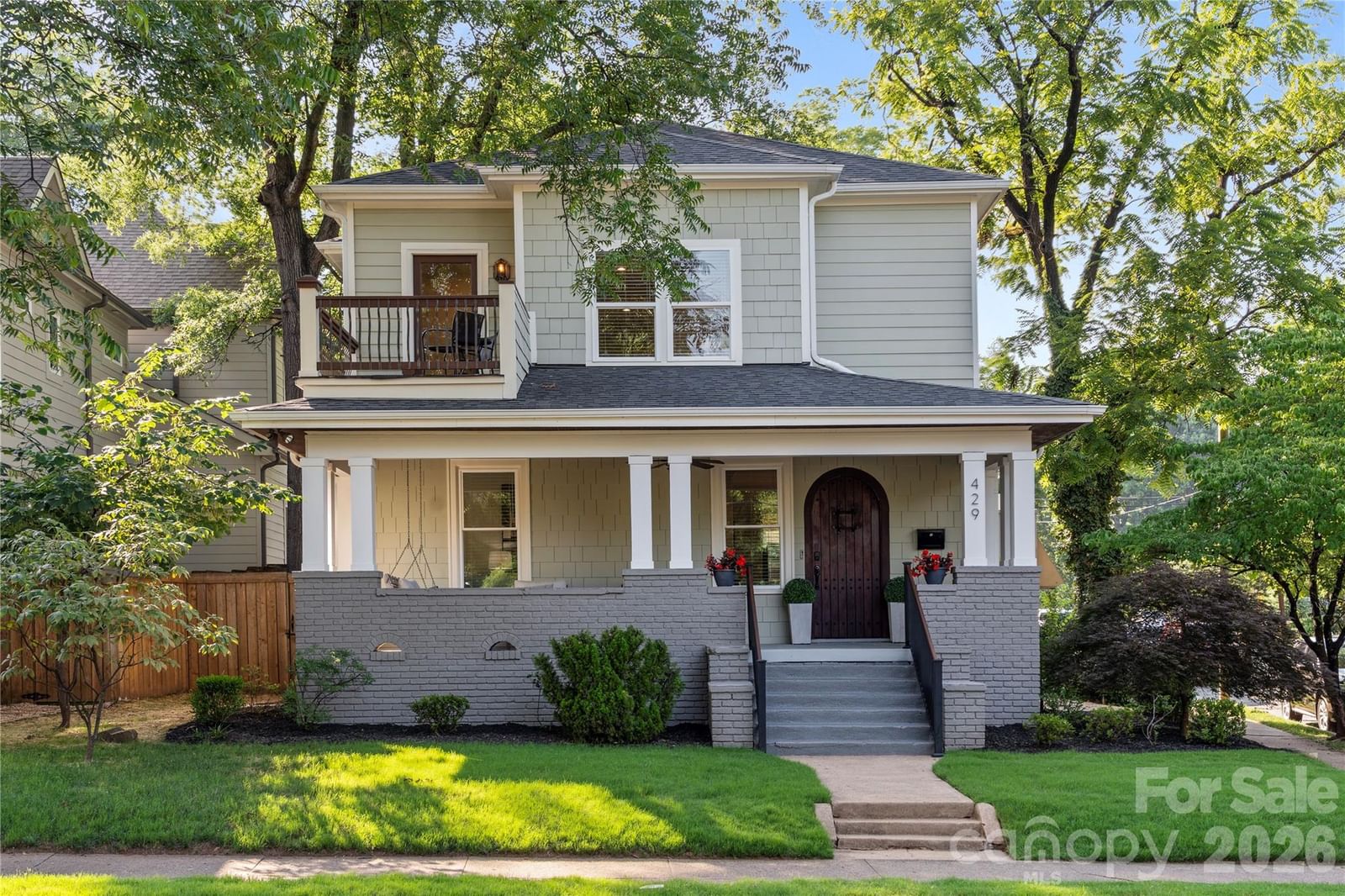
Elizabeth sits about 1 mile from Uptown Charlotte, and it's one of the city's oldest streetcar suburbs. It was founded in 1891 and annexed in 1907. Today it pairs tree-canopied historic streets with a compact, walkable commercial core. If you want city access without living in a high-rise, it's one of the most practical addresses in Charlotte.
Below, we cover the neighborhood's character, its housing, where residents spend their time, and how people get around.
What Is It Like to Live in Elizabeth, Charlotte?
Elizabeth is lively but still residential. The streets are walkable, the restaurant corridors stay busy, and Uptown is a 5–10 minute drive away. The side streets, meanwhile, stay calm. This isn't a nightlife district like South End. You can walk to dinner, a workout class, or a coffee meeting, then head home to a quiet, leafy block.
Is Elizabeth a walkable neighborhood?
Yes. In a city that is largely car-dependent, Elizabeth is one of the most walkable neighborhoods in Charlotte. Walk Score rates it at 66, and other published figures put it as high as 72. Either number is roughly double Charlotte's citywide average of 34.
Transit and biking score lower. Elizabeth's real strength is walking to everyday needs, not living car-free.
Elizabeth Accessibility Scores
A quick read on Elizabeth’s urban convenience: walkability is the strongest attribute, with moderate transit and bike access.
Walk Score66/100
Transit Score49/100
Bike Score44/100
A quick read on Elizabeth’s urban convenience: walkability is the strongest attribute, with moderate transit and bike access.
In practice, most residents we work with still own a car. They simply drive it far less than their friends in the suburbs do. Errands, dinners, and workouts tend to happen on foot along Elizabeth Avenue, Hawthorne Lane, and 7th Street.
Who lives in Elizabeth?
Elizabeth attracts a mix of young professionals, healthcare workers, and long-time homeowners. The neighborhood covers about 1.384 square miles, and historical counts put its population at roughly 3,900–4,000 residents. That small footprint is a big part of the appeal. Within a few weeks, you'll start recognizing faces at the coffee shop.
Several factors draw career-focused residents:
•Proximity to Uptown. Charlotte is the nation's 2nd-largest banking center, and Uptown is a 5–10 minute drive.
•Two major hospitals within walking distance. That makes Elizabeth a natural fit for medical professionals.
•Steady growth across the metro. Charlotte added roughly 57,000 new residents between mid-2023 and mid-2024, or about 157 people per day. Close-in neighborhoods like Elizabeth feel that demand first.
Does Elizabeth feel historic or modern?
It feels like both. Most of the housing dates to the early 20th century, while the commercial strips keep getting refreshed with newer restaurants, studios, and mixed-use buildings.
The Elizabeth Historic District is listed on the National Register of Historic Places. It spans 265 acres and includes 887 contributing buildings. You'll find mature oaks, front porches, and brick sidewalks just a block from modern fitness studios and cocktail bars.
What Is the Real Estate Like in Elizabeth?
Most homes in Elizabeth are single-family: bungalows, Craftsman homes, and Colonial Revivals built mainly between the 1920s and 1940s. Condos, townhomes, and newer infill are mixed in, especially near the commercial corridors. Young professionals should expect a high-value, low-inventory market where renting is often the way in.
Elizabeth Market Snapshot: October 2026
Headline pricing, inventory, rent, and pace-of-market indicators for Elizabeth—useful for young professionals weighing buy-versus-rent options near Uptown.
Realtor.com's October 2026 neighborhood page reports the following:
•Pricing. The median listing price is $701,000, or $346/sq ft. Realtor.com also lists a higher median sold price. In a neighborhood this small, so few homes sell that the figure can skew toward larger renovated properties. Treat it as a rough signal, not a benchmark.
•Inventory. Only 40 active listings are on the market, so the selection is thin.
•Rentals. There are 112 rental properties, with a median rent of $1,871/mo.
Elizabeth's location and historic character earn it a clear premium over the citywide market. ZIP code 28204 as a whole, which includes more condos, shows a median listing price of $499,900. If you're shopping for a condo or townhome, that's the more realistic benchmark.
What types of homes are in Elizabeth, and what do they cost?
Price depends mostly on a home's age and how much renovation it has had. Based on 2026 neighborhood pricing:
Data Table
Home Type
Typical Price Range
Smaller 1940s bungalows and Craftsman homes
$500K – $800K
Larger renovated homes
$800K – $1.5M
New construction and custom rebuilds
$1.2M – $2.5M
When we tour bungalows here with first-time buyers, two questions almost always come up. Have the kitchen and baths been updated? And how old are the HVAC and roof? Those answers can move a home's value by six figures.
Are there condos and townhomes in Elizabeth?
Yes, though they make up a smaller share of the market than you might expect in an urban neighborhood. A handful of condo buildings and townhome clusters sit mostly near Elizabeth Avenue, Hawthorne Lane, and the edges bordering Uptown and Independence Boulevard.
Common features include:
•Contemporary or industrial-influenced exteriors that complement the historic surroundings
•Restored brick in older multi-unit buildings
•Structured or garage parking, a major advantage on busy streets
•Rooftop decks or private terraces in some newer townhomes
Because condo and townhome inventory is limited, we encourage buyers to also look at neighboring areas like Cherry, where the median listing price is $425,000.
What are typical lot sizes in Elizabeth?
By Charlotte standards, lots in Elizabeth are modest. Many detached homes sit on older, narrower urban lots, and townhomes and condos have little or no yard.
For context, typical Charlotte townhomes sit on 0.03–0.08 acre, while single-family lots usually run 0.15–0.40 acre. Elizabeth's historic lots generally land at the lower end of that single-family range.
City zoning also limits how much of a lot a house can cover. Lots up to 4,000 sq ft are capped at 50% building coverage, and lots between 6,501 and 8,500 sq ft are capped at 40%. If you're planning an addition, those limits matter.
What do HOA fees look like in Elizabeth?
Most single-family homes in Elizabeth have no HOA. Condos and townhomes almost always do. Typical 2026 Charlotte ranges:
•Townhome communities:$200–$450/mo
•Mid-rise condos:$300–$700/mo
•Charlotte median HOA fee (Q3 2024):$310
Before you buy a condo, ask for the association's reserve study. A healthy reserve is funded at 70% or higher. In North Carolina, resale document fees are capped at $300 total.
Should I buy or rent in Elizabeth?
For many young professionals, it makes sense to rent in Elizabeth first and buy once you're committed to staying 5+ years. Build your timeline around that 5+ years mark.
On the cost side:
•30-year fixed mortgage rates in the area average around 7.25%.
•Annual ownership costs for a typical Charlotte townhome run $7,550–$9,750 before mortgage payments.
•Forecasts call for 3–5% annual price appreciation in a base-case scenario.
Taken together, the math tends to favor buyers who plan to stay for the long haul.
Young Professional Neighborhood Rent Comparison
Median rent prices across popular Charlotte neighborhoods for singles and young professionals, highlighting Elizabeth’s relative affordability versus Dilworth and Freedom Park.
Belmont
Dilworth
Elizabeth
First Ward
Freedom Park
Median rent prices across popular Charlotte neighborhoods for singles and young professionals, highlighting Elizabeth’s relative affordability versus Dilworth and Freedom Park.
In this young-professional comparison, Elizabeth's median rent of $1,316 comes in noticeably below Dilworth ($1,606) and Freedom Park ($1,420). It differs from the $1,871 median in the market snapshot because the two sources use different methods and time frames. Read the comparison as a relative ranking, not a quote.
For a two-bedroom, budget within Charlotte's typical $1,800–$2,400 range.
Where Do People Hang Out in Elizabeth?
Social life in Elizabeth revolves around three areas: the Elizabeth Avenue and Hawthorne Lane corridor, 7th Street, and Independence Park. Most of the neighborhood's restaurants, bars, and fitness studios are just a few blocks apart.
Elizabeth Lifestyle Anchors
Key neighborhood amenities and practical lifestyle markers that shape Elizabeth’s everyday appeal for urban-minded residents.
What are the best restaurants and bars in Elizabeth?
Dining here runs from casual bakeries to upscale, award-winning restaurants. At either end of that range:
•Sun Flour Baking Company is a walkable morning staple.
•The Fig Tree Restaurant occupies a historic home and is the go-to for special occasions.
Evenings often start on the 7th Street strip, which is lined with burger spots, pizza places, and Latin street food. Clients who care about cocktails tend to end up at The Crunkleton , one of the neighborhood's best-known bars for a serious drink.
If you want rowdier nightlife, Plaza Midwood is a short drive or ride east.
What parks are in Elizabeth?
Elizabeth has two key green spaces.
•Independence Park is Charlotte's oldest park and the neighborhood's main outdoor gathering spot. It has sports courts, open lawn, and a rose garden, and it's a favorite for after-work runs.
•Elizabeth Park is smaller and tucked away, ideal for a quiet morning coffee.
The Little Sugar Creek Greenway runs along the neighborhood's edge toward Midtown and Freedom Park, giving you a car-free route for longer runs and rides.
Is Elizabeth good for fitness and boutique gyms?
Yes. The Elizabeth–Plaza Midwood area has a dense cluster of boutique studios. Lagree, barre, HIIT, Pilates, and personal training are all on offer, most within a short walk or drive. For many of our young-professional clients, having a studio within walking distance is what tips the decision toward Elizabeth over the suburbs.
Is Elizabeth near shopping?
Yes. Midtown's retail district along Independence Boulevard and Kings Drive is just minutes away, and Uptown's dining and entertainment sit about a mile west.
Elizabeth also borders the Central Piedmont Community College main campus, which brings extra foot traffic and a steady supply of cafés along the western edge.
How Is the Commute from Elizabeth to Uptown Charlotte?
The commute is one of Elizabeth's biggest selling points. Uptown is a 5–10 minute drive, and the CityLYNX Gold Line streetcar runs right through the neighborhood into Center City. Few Charlotte neighborhoods offer this much access so close in.
Does Elizabeth have a train or light rail station?
Elizabeth has no LYNX Blue Line light rail station. Instead, the CityLYNX Gold Line streetcar serves the neighborhood along Elizabeth Avenue and Hawthorne Lane. The Gold Line runs to Uptown, where you can transfer to the Blue Line for South End, UNC Charlotte, or the southern suburbs.
There's no direct rail connection to Charlotte Douglas International Airport, so plan on a rideshare or a drive. It's typically an easy trip via I-277 and I-77.
What bus routes serve Elizabeth?
CATS (Charlotte Area Transit System) buses run along Hawthorne Lane, Central Avenue, and Elizabeth Avenue, connecting the neighborhood to Uptown, Plaza Midwood, and eastern Charlotte.
Service is solid by Charlotte standards, but keep expectations realistic. Elizabeth's Transit Score is 49, and about 1/3 of CATS stops citywide have no shelter or bench.
How long are commutes from Elizabeth to other job centers?
Typical one-way drive times:
Data Table
Destination
Estimated Commute
Uptown Charlotte
5–10 minutes
South End
Very easy (short drive or rideshare)
Ballantyne
40–50 minutes
Mountains (weekend trips)
~2 hours
Coast
3–3.5 hours
For comparison, the average Mecklenburg County commute is about 25 minutes, and Charlotte drivers lose 40–60+ hours a year to traffic. Most Elizabeth residents who work Uptown sidestep the worst of it.
What highways are near Elizabeth?
Independence Boulevard and I-277 are the main driving routes. I-277, the inner loop around Uptown, gets you to I-77 and I-85 within minutes. Independence Boulevard heads east toward Matthews.
Is Elizabeth bike-friendly?
Moderately. Elizabeth's Bike Score is 44. Biking works well for short local trips and greenway rides, but busy corridors like Independence Boulevard aren't comfortable for cyclists.
Connections nearby are getting better. Charlotte's Rail Trail runs 3.5 miles through South End and links to about 40 miles of bikeways. A long-awaited pedestrian bridge will also connect South End to Uptown.
$16.3-millionApproved Bid Amount
South End–Uptown Pedestrian Bridge
A major urban connectivity project designed to link South End and Uptown across I-277—important for car-light commuters and walkable-city living.
The 280-foot bridge over I-277 is budgeted at $16.3 million and expected to open in the second quarter of 2028. Once it does, car-light trips between Elizabeth, Uptown, and South End will get noticeably easier.
Is Elizabeth a Good Neighborhood for Young Professionals?
Yes, particularly if you value walkability, a short commute to Uptown, and historic character over square footage or nightlife.
The trade-offs are real:
•Purchase prices sit well above the Charlotte median.
•Condo and townhome inventory is limited.
•Transit works, but it won't let you go fully car-free.
Still, for professionals who work Uptown or in healthcare, few neighborhoods match Elizabeth's blend of convenience and charm. Many of our clients start out renting here. Once they decide to stay, they buy, either in Elizabeth itself or just over the line in neighboring areas like Cherry.
Listings courtesy of Canopy MLS as distributed by MLS GRID
Based on information submitted to the MLS GRID as of Oct 19, 2026, 9:05 AM EDT. All data is obtained from various sources and may not have been verified by broker or MLS GRID. Supplied Open House Information is subject to change without notice. All information should be independently reviewed and verified for accuracy. Properties may or may not be listed by the office/agent presenting the information.
IDX information is provided exclusively for consumers' personal, non-commercial use and may not be used for any purpose other than to identify prospective properties consumers may be interested in purchasing. Information is deemed reliable but is not guaranteed by MLS GRID. Use of it may be subject to an end user license agreement prescribed by the MLS.
Properties displayed may be listed or sold by various participants in the MLS.
Some IDX listings have been excluded from this website.
Any use or search of the data on this website, other than by a consumer looking to purchase real estate, is prohibited.
Explore Charlotte, NC Neighborhoods
Dive deeper into the specific villages and communities that make Charlotte, NC unique.
Is Elizabeth in Charlotte, NC a good neighborhood for families?
Elizabeth is a lively but residential neighborhood with calm, tree-lined side streets, historic homes, and access to parks. Independence Park, Charlotte’s oldest park, offers sports courts, open lawn, a rose garden, and space for after-work runs, while smaller Elizabeth Park provides a quieter green space.
Are there condos and townhomes in Elizabeth, Charlotte, NC?
Yes, Elizabeth has condos and townhomes, but they make up a smaller share of the market than single-family homes. Most are found near Elizabeth Avenue, Hawthorne Lane, and the edges bordering Uptown and Independence Boulevard, with features such as garage or structured parking, rooftop decks, private terraces, or restored brick in older buildings.
How much does it cost to buy a home in Elizabeth, Charlotte, NC?
Elizabeth is a higher-priced, low-inventory neighborhood. The median listing price is $701,000, with smaller 1940s bungalows and Craftsman homes typically ranging from $500K to $800K, larger renovated homes from $800K to $1.5M, and new construction or custom rebuilds from $1.2M to $2.5M.
What are HOA fees like in Elizabeth, Charlotte, NC?
Most single-family homes in Elizabeth do not have an HOA. Condos and townhomes usually do, with typical Charlotte townhome HOA fees ranging from $200 to $450 per month and mid-rise condo fees ranging from $300 to $700 per month.
Is Elizabeth, Charlotte, NC affordable for young professionals?
Elizabeth carries a premium because of its location near Uptown, historic character, and walkability. Renting is often the more practical entry point for young professionals, with reported median rent figures ranging from $1,316 in one comparison set to $1,871 in a market snapshot, while typical two-bedroom rents in Charlotte run about $1,800 to $2,400.
How is the commute from Elizabeth, Charlotte, NC to Uptown?
Elizabeth is about 1 mile from Uptown Charlotte, and the drive typically takes 5 to 10 minutes. The CityLYNX Gold Line streetcar also runs through the neighborhood along Elizabeth Avenue and Hawthorne Lane into Center City.
Does Elizabeth, Charlotte, NC have public transportation?
Elizabeth is served by the CityLYNX Gold Line streetcar and CATS bus routes along Hawthorne Lane, Central Avenue, and Elizabeth Avenue. The neighborhood does not have a LYNX Blue Line light rail station, but riders can connect to the Blue Line in Uptown.
What schools are near Elizabeth in Charlotte, NC?
Elizabeth is close to the Central Piedmont Community College main campus, which adds foot traffic and cafés along the neighborhood’s western edge. Specific K–12 schools, boundaries, and ratings are not identified for Elizabeth, so school fit should be checked by individual address.